
TMJ and jaw pain treatment in Kelowna
Jaw pain, clicking and clenching are common reasons people book hands-on treatment. The muscles involved are reachable, both from outside and, where appropriate, inside the mouth.
What is usually going on
The temporomandibular joint is loaded by a small group of powerful muscles: masseter, temporalis and the pterygoids. Clenching and grinding, often stress-driven or sleep-related, keep them short and irritable, which produces jaw ache, clicking, restricted opening and frequently headaches around the temples.
Treatment addresses those muscles directly along with the neck, which almost always contributes. Some therapists are trained in intraoral work, which reaches muscles that cannot be treated from the outside; it is always optional, explained beforehand, and done with gloves.
When to see a doctor instead
See your dentist as well if you grind at night, have a jaw that locks open or closed, or have dental pain. A night guard often works alongside manual treatment.
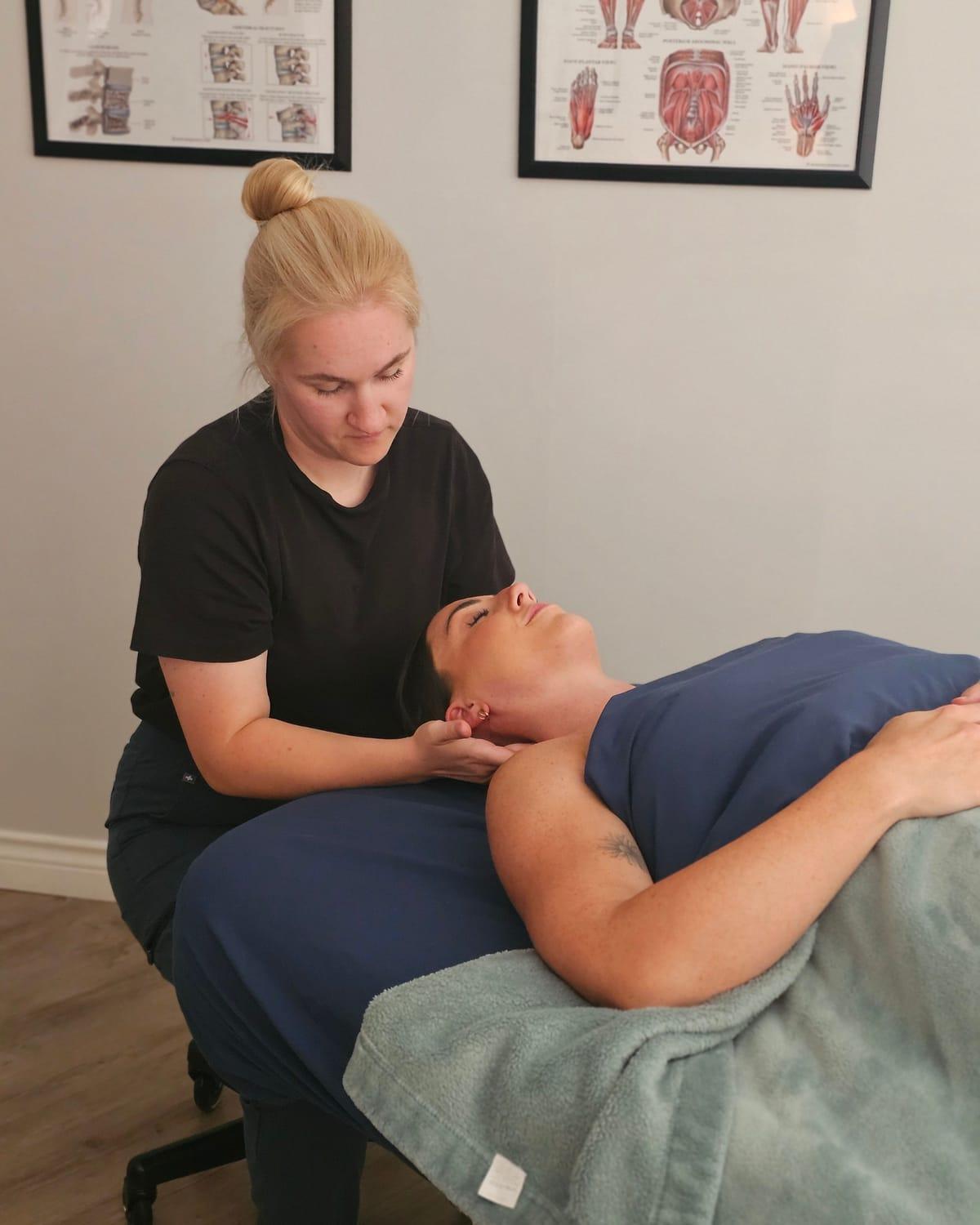
How we treat it
2 of our disciplines are used for this, often together. If you are not sure which to book, call and describe what is going on.
Massage therapy
Assessment-led, hands-on care for pain, tension, recovery and mobility.
At both clinics
Details and ratesAcupuncture
Fine, sterile needles, commonly booked for pain, tension and recovery.
At Glenmore only
Details and ratesMassage style:TMJ and jaw massage
Before you book
All questionsCan massage help TMJ and jaw pain?
Massage therapy may help some people with jaw pain, clicking and clenching, because the muscles that load the jaw can be reached from the outside and, where appropriate, inside the mouth. Treatment usually includes the neck as well, since it almost always contributes. Registered massage therapy is offered at both Back in Health clinics in Kelowna, and acupuncture for jaw tension is at Glenmore.
What is intraoral TMJ massage, and do I have to have it?
Intraoral massage is gloved work on jaw muscles from inside the mouth, which reaches muscles that cannot be treated from the outside. It is always optional, explained beforehand, and you can stop at any time. At Back in Health, Derya Welder has completed an in-depth course on treating TMJ disorder intra-orally and works at both the Glenmore and Kirschner clinics.
Should I see a dentist or a massage therapist for jaw pain?
Often both. See your dentist if you grind at night, your jaw locks open or closed, or you have dental pain, because a night guard or dental care may be needed. Massage therapy can work alongside that by addressing the jaw and neck muscles involved.
Can jaw clenching cause headaches?
Yes, clenching and grinding commonly come with headaches around the temples, because the temporalis muscle that closes the jaw sits there. Tight neck muscles often add to it. If your headaches and jaw pain tend to arrive together, mention both when you book so your therapist can assess them together.
What can I do at home for jaw clenching between visits?
Notice when you clench during the day and let your teeth rest apart with your tongue relaxed on the roof of your mouth. Softer foods during a flare, gentle heat on the jaw muscles and stress management are common self-care steps. Your therapist can show you simple self-massage and stretches that suit what they found.
Do I need a doctor referral to book?
No. In British Columbia you can book massage therapy, physiotherapy, osteopathy, kinesiology and acupuncture directly, with no referral. Some extended health plans ask for a referral before they reimburse, so check your own plan if you intend to claim.
What is the difference between massage therapy, physiotherapy and osteopathy?
Massage therapy works on soft tissue directly, and people often book it for pain and tension. Physiotherapy assesses how a joint moves and loads, then combines manual treatment with a progressive exercise plan. Manual osteopathy is gentler and whole-body, working on restriction across joints, fascia and connective tissue.
Can you help me choose a practitioner?
Yes. Call the clinic you would like to visit, or email admin@backinhealth.ca with a short description of what is going on, and the front desk will suggest a discipline and a practitioner who fits.
What should I expect at my first visit?
Arrive a few minutes early to complete a short health history. Your practitioner will ask about your symptoms and goals, assess the area, and then treat. You leave with a plan: what was found, what to do at home and whether a follow-up is worth booking.
Book treatment for TMJ & jaw pain
Or callGlenmore250-762-4748Kirschner250-860-0383