Neck and shoulder pain treatment in Kelowna
Neck and shoulder pain is the most common reason people come in, and it is usually a load problem before it is a tissue problem. The same position, held too long, too often.
What is usually going on
Desk work, phones, driving and carrying all load the neck and shoulder girdle in a narrow range. Over time the tissue that holds that position gets tight and irritable, movement drops, and the area becomes sensitive to things it used to tolerate.
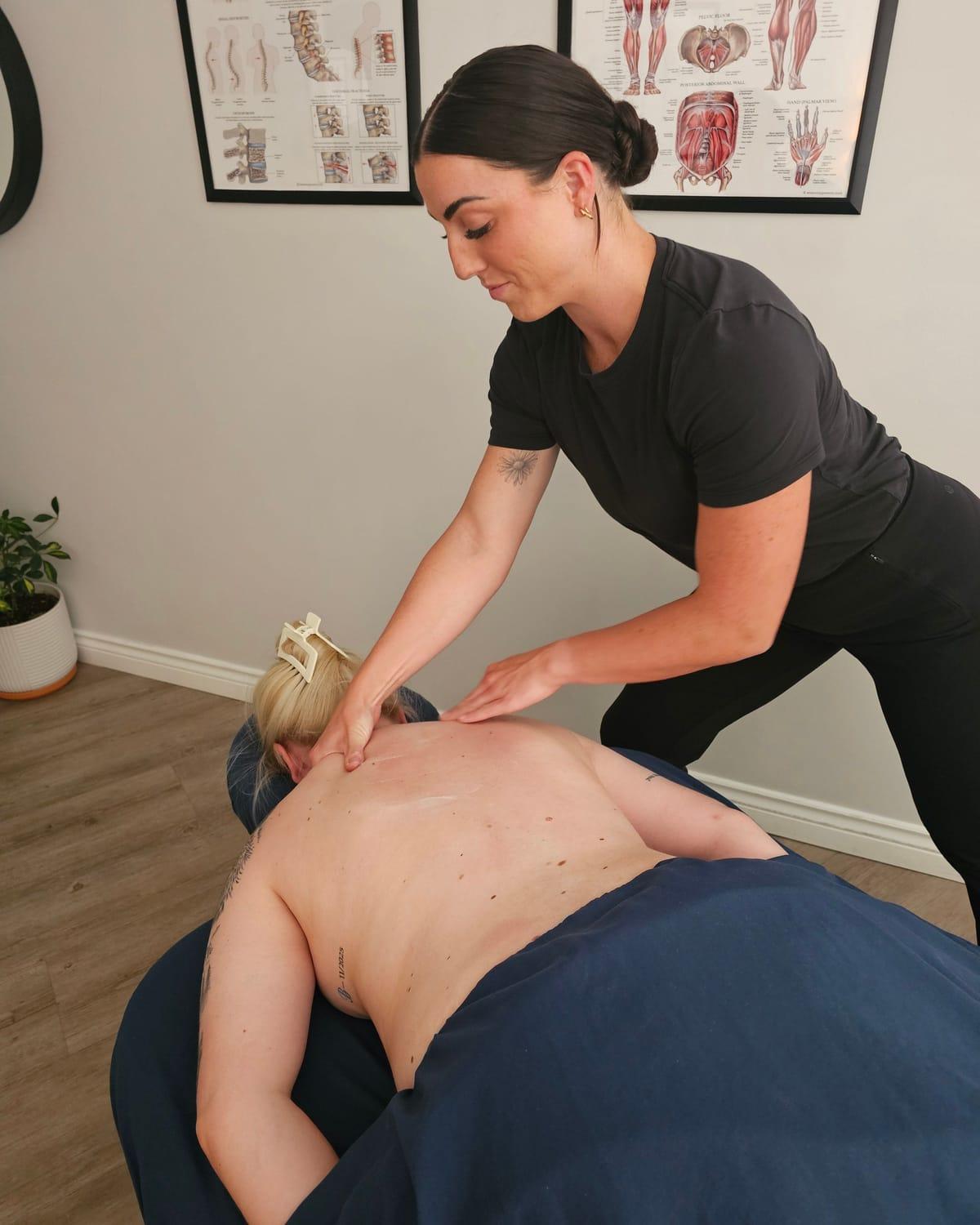
Treatment works the affected tissue directly, works on the movement that has been lost, and then looks at whatever is causing it: workstation height, sleep position, training load. Without that last part the pain tends to come back on the same schedule.
When to see a doctor instead
See a doctor for neck pain following a significant impact, or with fever, unexplained weight loss, or progressive weakness or numbness in an arm.
How we treat it
3 of our disciplines are used for this, often together. If you are not sure which to book, call and describe what is going on.
Massage therapy
Assessment-led, hands-on care for pain, tension, recovery and mobility.
At both clinics
Details and ratesPhysiotherapy
Practical treatment and movement plans aimed at getting function back.
At Kirschner only
Details and ratesOsteopathy
Gentle manual care that looks at how the whole body is moving.
At Kirschner only
Details and ratesMassage style:Deep tissue massage
Before you book
All questionsShould I see a massage therapist or a physiotherapist for neck pain?
Both treat neck and shoulder pain, so the choice depends on what you need. Massage therapy focuses on the tight, irritable tissue and lost movement, while physiotherapy adds a structured rehab plan, which can suit pain after an injury or pain that keeps returning. Registered massage therapy is at both Back in Health clinics in Kelowna, and physiotherapy is at Kirschner.
Can massage help a stiff neck from desk work?
Massage therapy may help some people with neck and shoulder stiffness from desk work, by working the tissue that holds the same position for hours and restoring lost movement. Your therapist also looks at what is loading it, such as workstation height, phone use or sleep position. Without that last part, the stiffness often returns on the same schedule.
Is tingling in my arm coming from my neck?
Tingling into the arm or hand can come from the neck, and it is one of the things your practitioner checks during assessment. Mention it when you book so the right person and appointment length are chosen. See a doctor if the numbness or weakness is getting worse, follows a significant impact, or comes with fever or unexplained weight loss.
How often should I book massage for neck and shoulder pain?
It depends on how long the pain has been going on and how much of it comes from your daily routine. Some people start with a few visits fairly close together and then space them out as they get on top of the home exercises. Your therapist can suggest a schedule after your first assessment.
What can I do at work to keep neck pain from coming back?
Set your screen at eye height, keep your keyboard close enough that your shoulders can relax, and get up and move for a minute or two at regular intervals. Varying your position matters more than finding one perfect posture. Your practitioner can give you a short set of exercises suited to what they found.
Do I need a doctor referral to book?
No. In British Columbia you can book massage therapy, physiotherapy, osteopathy, kinesiology and acupuncture directly, with no referral. Some extended health plans ask for a referral before they reimburse, so check your own plan if you intend to claim.
What is the difference between massage therapy, physiotherapy and osteopathy?
Massage therapy works on soft tissue directly, and people often book it for pain and tension. Physiotherapy assesses how a joint moves and loads, then combines manual treatment with a progressive exercise plan. Manual osteopathy is gentler and whole-body, working on restriction across joints, fascia and connective tissue.
Can you help me choose a practitioner?
Yes. Call the clinic you would like to visit, or email admin@backinhealth.ca with a short description of what is going on, and the front desk will suggest a discipline and a practitioner who fits.
What should I expect at my first visit?
Arrive a few minutes early to complete a short health history. Your practitioner will ask about your symptoms and goals, assess the area, and then treat. You leave with a plan: what was found, what to do at home and whether a follow-up is worth booking.
Book treatment for neck & shoulder pain
Or callGlenmore250-762-4748Kirschner250-860-0383