
Sciatica and low back pain treatment in Kelowna
Sciatic pain travels. Down the buttock, the back of the thigh, sometimes past the knee. Low back pain that stays local is a different problem. Which one you have changes what treatment should do.
What is usually going on
True sciatica means the sciatic nerve is being irritated somewhere along its path, most often at the lumbar spine or where it passes through the deep hip rotators. Referred pain from muscle and joint tissue can feel similar without involving the nerve at all.
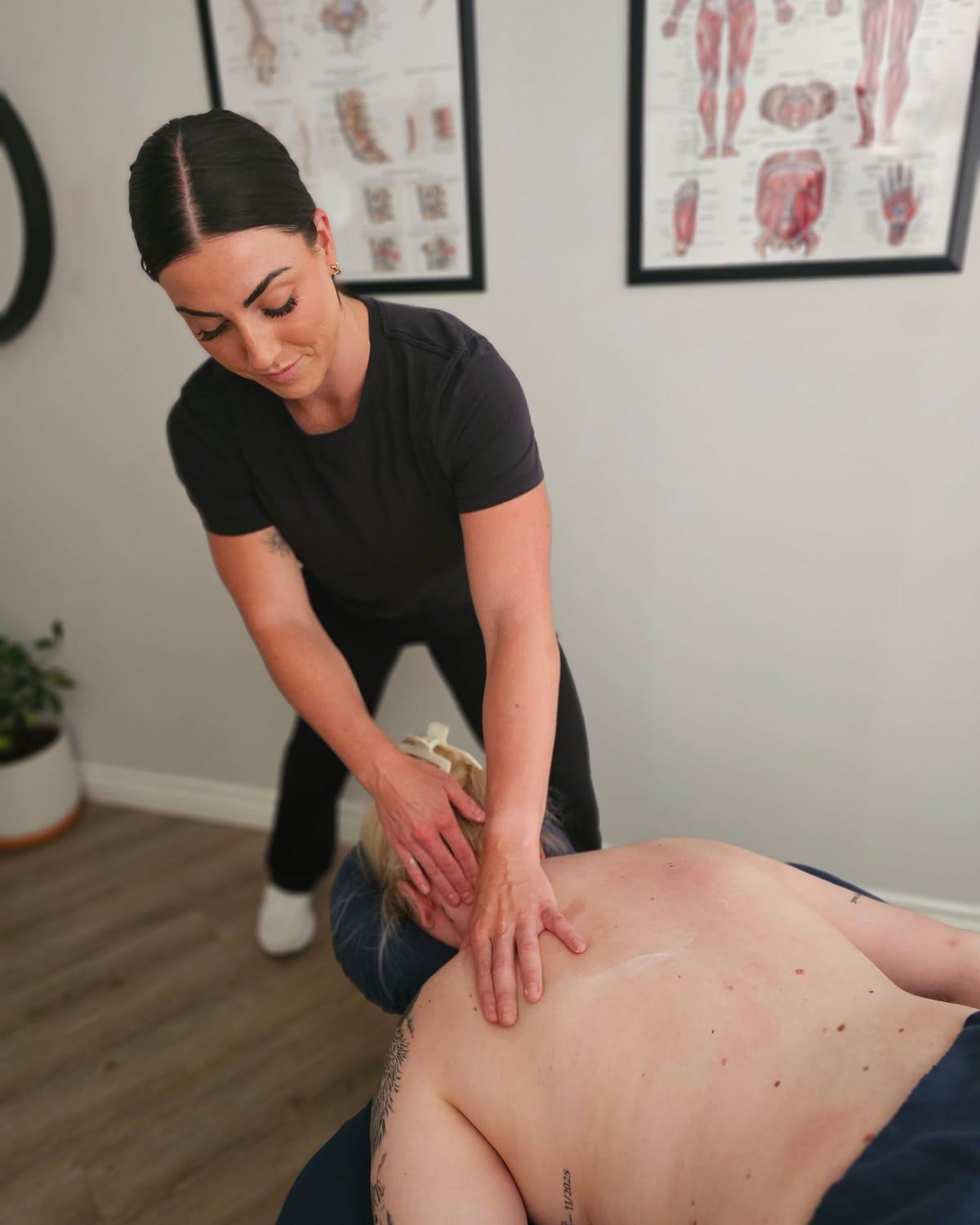
Assessment comes first because the two need different handling. From there, treatment usually combines hands-on work through the hip, glutes and low back with movement aimed at building tolerance to sitting, bending and loading. Physiotherapy leads when there is a clear mechanical cause and a rehab plan is needed; massage therapy and osteopathy lead when the driver is soft tissue and long-standing restriction.
When to see a doctor instead
Seek urgent medical care for numbness around the groin or inner thighs, loss of bladder or bowel control, or progressive weakness in a leg. These are red flags and need same-day assessment, not massage.
How we treat it
4 of our disciplines are used for this, often together. If you are not sure which to book, call and describe what is going on.
Massage therapy
Assessment-led, hands-on care for pain, tension, recovery and mobility.
At both clinics
Details and ratesPhysiotherapy
Practical treatment and movement plans aimed at getting function back.
At Kirschner only
Details and ratesOsteopathy
Gentle manual care that looks at how the whole body is moving.
At Kirschner only
Details and ratesKinesiology
Movement-based care built around real life, work and sport goals.
At Kirschner only
Details and ratesMassage style:Deep tissue massage
Before you book
All questionsShould I see a physiotherapist or an RMT for sciatica?
Either is a reasonable first step, and the right choice depends on what is driving your pain. Physiotherapy tends to lead when there is a clear mechanical cause and you need a rehab plan, while massage therapy suits pain coming mainly from tight soft tissue around the hip, glutes and low back. At Back in Health, physiotherapy is at the Kirschner clinic and registered massage therapy is at both Glenmore and Kirschner.
Can massage help sciatica?
Massage therapy may help some people with sciatica, particularly when tight muscles in the buttock and deep hip rotators are part of the problem. Treatment usually works the hip, glutes and low back, and is paired with movement aimed at building your tolerance to sitting and bending. If you have numbness, weakness or a worsening pattern, an assessment by a physiotherapist or doctor comes first.
Should I rest or stay active with sciatica?
For most people, staying gently active is generally recommended over prolonged bed rest. Walking, changing position often and avoiding long stretches of sitting are common starting points, and your practitioner can give you specific movements based on your assessment. Stop any activity that sends pain further down the leg and mention it at your next visit.
How many sessions does sciatica treatment usually take?
There is no fixed number, because sciatica varies a great deal in cause and severity. Your practitioner sets out a plan after your first assessment and checks it as you go, adjusting frequency to how your symptoms respond. Exercises you do between visits are usually a large part of that plan.
When is sciatica an emergency?
Numbness around the groin or inner thighs, loss of bladder or bowel control, or weakness in a leg that is getting worse are red flags that need same-day medical care. Go to an emergency department or see a doctor urgently rather than booking massage or physiotherapy. These symptoms are uncommon, but they should never wait.
Do I need a doctor referral to book?
No. In British Columbia you can book massage therapy, physiotherapy, osteopathy, kinesiology and acupuncture directly, with no referral. Some extended health plans ask for a referral before they reimburse, so check your own plan if you intend to claim.
What is the difference between massage therapy, physiotherapy and osteopathy?
Massage therapy works on soft tissue directly, and people often book it for pain and tension. Physiotherapy assesses how a joint moves and loads, then combines manual treatment with a progressive exercise plan. Manual osteopathy is gentler and whole-body, working on restriction across joints, fascia and connective tissue.
Can you help me choose a practitioner?
Yes. Call the clinic you would like to visit, or email admin@backinhealth.ca with a short description of what is going on, and the front desk will suggest a discipline and a practitioner who fits.
What should I expect at my first visit?
Arrive a few minutes early to complete a short health history. Your practitioner will ask about your symptoms and goals, assess the area, and then treat. You leave with a plan: what was found, what to do at home and whether a follow-up is worth booking.
Book treatment for sciatica & low back pain
Or callGlenmore250-762-4748Kirschner250-860-0383