Pregnancy and postpartum massage in Kelowna
Pregnancy changes how you carry load, and the low back, hips and pelvis take most of it. Treatment is adapted to the trimester and to how you are actually comfortable lying.
What is usually going on
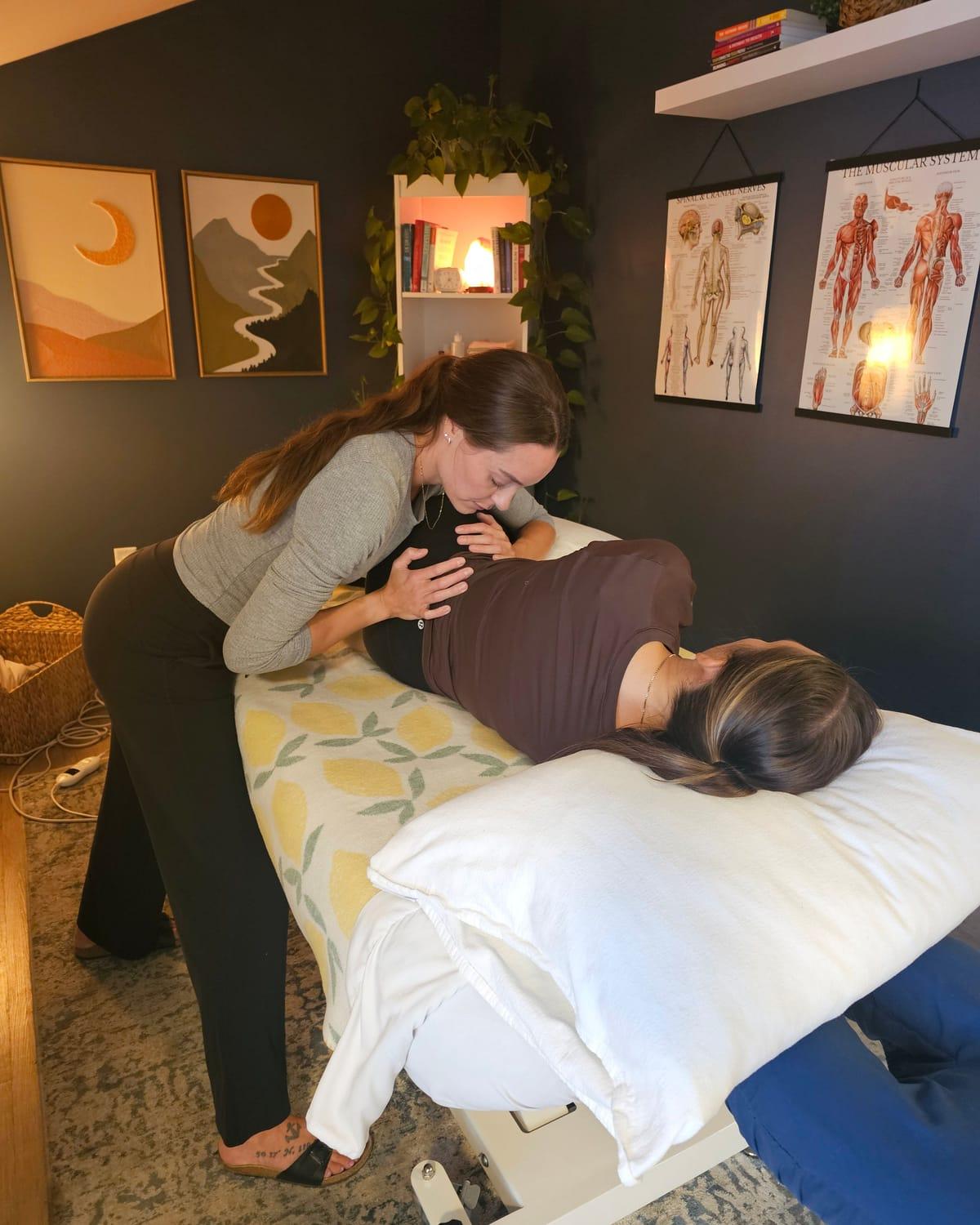
Most pregnancy massage is done side-lying with bolstering under the belly, between the knees and along the ribs, rather than face-down. Most people find it more comfortable than the table cut-outs some clinics still use, and it lets your therapist reach the low back, glutes and hips properly.
Common reasons to book are low back and pelvic girdle discomfort, hip tightness, upper back and rib tension as the ribcage widens, and swelling in the legs. Postpartum, the picture shifts to the neck, shoulders and upper back from feeding and carrying.
When to see a doctor instead
Tell us about any pregnancy complications when you book, and check with your midwife or doctor first if you have been advised to limit activity. Contact your care provider directly for bleeding, reduced fetal movement, severe swelling or severe headache.
How we treat it
One discipline handles this at Back in Health. If you are not sure which to book, call and describe what is going on.
Massage style:Prenatal massage
Before you book
All questionsIs it safe to get a massage while pregnant?
For most healthy pregnancies, massage from a registered massage therapist is considered safe, with positioning and pressure adapted to the trimester you are in. Tell the clinic about any complications when you book. Check with your midwife or doctor first if you have pre-eclampsia, high blood pressure, a history of blood clots, placental complications or bleeding, or have been advised to limit activity.
Can I get a massage in the first trimester?
Yes. Some clinics decline first-trimester clients out of caution, but massage from a trained therapist is not known to cause problems in early pregnancy. What matters is that your therapist knows you are pregnant and how you are feeling on the day.
How do I lie during a pregnancy massage?
Most pregnancy massage is done lying on your side, with pillows supporting your belly, between your knees and along your ribs. From mid-pregnancy, lying flat on your back can leave you lightheaded and lying face down stops being comfortable, so side-lying lets your therapist reach the low back, glutes and hips properly. Your therapist adjusts the setup to what feels comfortable for you.
Is prenatal massage covered by extended health insurance?
Prenatal massage with a registered massage therapist is billed the same way as any other RMT visit, and Back in Health direct bills most major extended health plans. Coverage amounts and any referral requirements depend on your own plan, so check it before you book. Both the Glenmore and Kirschner clinics offer prenatal massage.
When can I get a massage after giving birth?
Many people book once they feel ready, and treatment is adapted to how you are recovering. If you had a caesarean birth or complications, check with your midwife or doctor first. Postpartum visits often focus on the neck, shoulders and upper back, which take on load from feeding and carrying.
Do I need a doctor referral to book?
No. In British Columbia you can book massage therapy, physiotherapy, osteopathy, kinesiology and acupuncture directly, with no referral. Some extended health plans ask for a referral before they reimburse, so check your own plan if you intend to claim.
What is the difference between massage therapy, physiotherapy and osteopathy?
Massage therapy works on soft tissue directly, and people often book it for pain and tension. Physiotherapy assesses how a joint moves and loads, then combines manual treatment with a progressive exercise plan. Manual osteopathy is gentler and whole-body, working on restriction across joints, fascia and connective tissue.
Can you help me choose a practitioner?
Yes. Call the clinic you would like to visit, or email admin@backinhealth.ca with a short description of what is going on, and the front desk will suggest a discipline and a practitioner who fits.
What should I expect at my first visit?
Arrive a few minutes early to complete a short health history. Your practitioner will ask about your symptoms and goals, assess the area, and then treat. You leave with a plan: what was found, what to do at home and whether a follow-up is worth booking.
Book treatment for pregnancy & postpartum
Or callGlenmore250-762-4748Kirschner250-860-0383