
Tension headache treatment in Kelowna
Most recurring headaches are not coming from your head. Tightness through the upper neck, jaw and shoulders refers pain up and around the skull, and that tissue is usually where treatment starts.
What is usually going on
A tension headache typically feels like pressure or a band around the head rather than the one-sided throb of a migraine. It often builds through the day, worsens with desk work or stress, and eases slightly when you move.
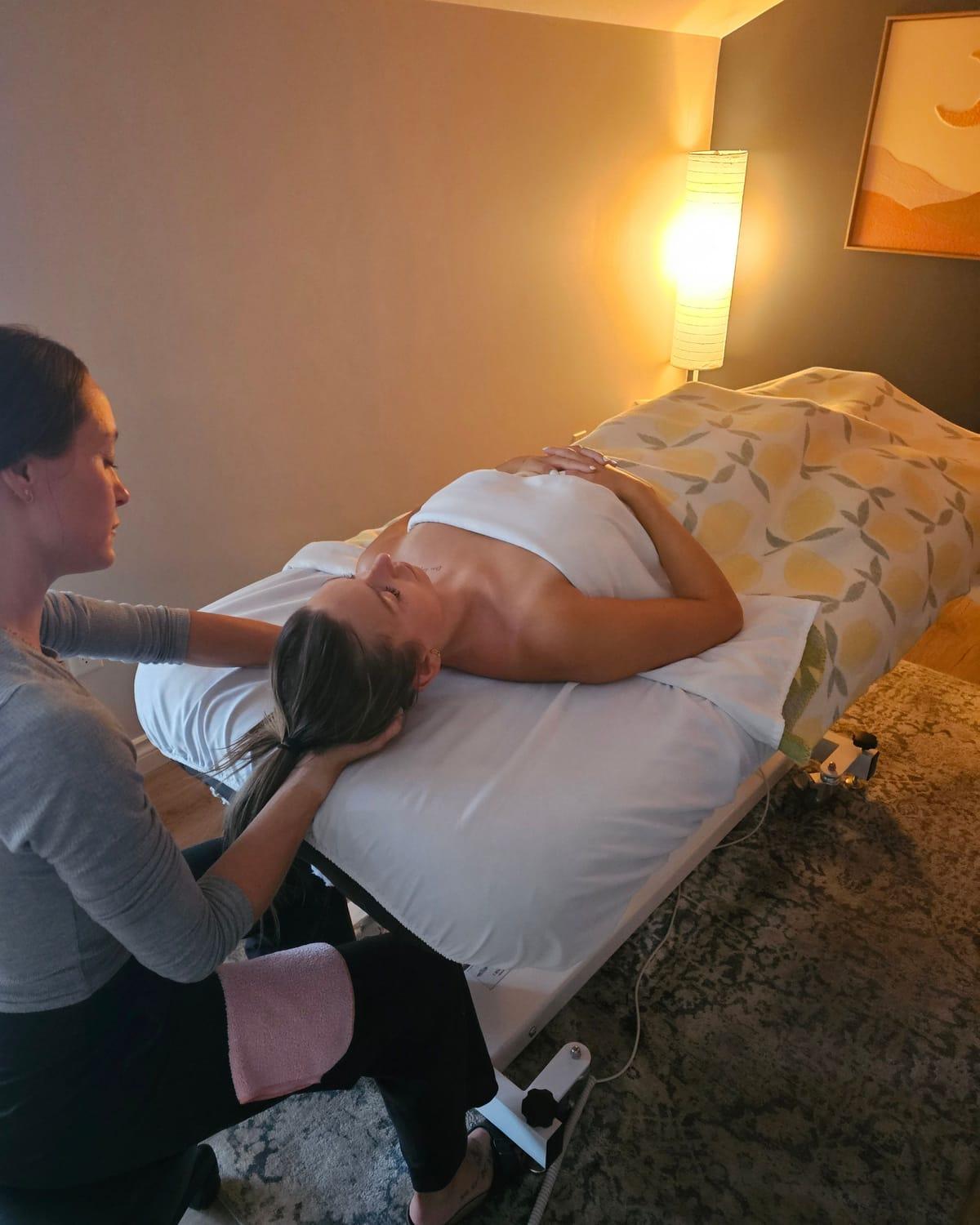
Treatment starts by working out which structures are involved: usually the suboccipitals at the base of the skull, upper trapezius, and the jaw muscles. Your therapist works those directly, checks how your neck moves, and gives you something specific to do between visits, because posture and load are usually part of the picture.
When to see a doctor instead
See a doctor promptly for a headache that is sudden and severe, follows a head injury, comes with fever, vision changes, weakness or confusion, or is different from your usual pattern.
How we treat it
3 of our disciplines are used for this, often together. If you are not sure which to book, call and describe what is going on.
Massage therapy
Assessment-led, hands-on care for pain, tension, recovery and mobility.
At both clinics
Details and ratesOsteopathy
Gentle manual care that looks at how the whole body is moving.
At Kirschner only
Details and ratesAcupuncture
Fine, sterile needles, commonly booked for pain, tension and recovery.
At Glenmore only
Details and ratesBefore you book
All questionsCan massage help tension headaches?
Massage therapy may help some people with tension headaches, because most of them are driven by tight muscles at the base of the skull, the upper neck, the shoulders and the jaw. A registered massage therapist works those areas directly and checks how your neck moves. Both Back in Health clinics in Kelowna, Glenmore and Kirschner, offer registered massage therapy.
How do I know if it is a tension headache or a migraine?
A tension headache usually feels like pressure or a tight band on both sides of the head, while a migraine is more often a one-sided throb that can come with nausea or sensitivity to light. Tension headaches tend to build through the day and worsen with desk work or stress. If your headaches are new, changing or severe, have them assessed by a doctor before booking hands-on treatment.
Can acupuncture help with tension headaches?
Some people book acupuncture for tension headaches, often alongside massage, with treatment aimed at the neck, shoulder and jaw muscles involved. At Back in Health, acupuncture is offered at the Glenmore clinic by a registered acupuncturist who is also a registered massage therapist. Acupuncturists in BC are regulated by the College of Complementary Health Professionals of BC.
How many massage sessions does it take for tension headaches?
It varies from person to person, so there is no set number. Many people book a few sessions fairly close together and then talk through with their therapist how the pattern of headaches has changed before deciding on spacing. Your therapist can suggest a plan at your first visit based on how long the headaches have been going on and what seems to be driving them.
What can I do at home for tension headaches between visits?
Short, regular breaks from screens, checking your desk and monitor height, and gentle neck and shoulder movement through the day are the usual starting points. Your therapist gives you specific stretches or exercises based on what they found, because posture and load are often part of the picture. Heat on the neck and shoulders is something many people find comfortable.
Do I need a doctor referral to book?
No. In British Columbia you can book massage therapy, physiotherapy, osteopathy, kinesiology and acupuncture directly, with no referral. Some extended health plans ask for a referral before they reimburse, so check your own plan if you intend to claim.
What is the difference between massage therapy, physiotherapy and osteopathy?
Massage therapy works on soft tissue directly, and people often book it for pain and tension. Physiotherapy assesses how a joint moves and loads, then combines manual treatment with a progressive exercise plan. Manual osteopathy is gentler and whole-body, working on restriction across joints, fascia and connective tissue.
Can you help me choose a practitioner?
Yes. Call the clinic you would like to visit, or email admin@backinhealth.ca with a short description of what is going on, and the front desk will suggest a discipline and a practitioner who fits.
What should I expect at my first visit?
Arrive a few minutes early to complete a short health history. Your practitioner will ask about your symptoms and goals, assess the area, and then treat. You leave with a plan: what was found, what to do at home and whether a follow-up is worth booking.
Book treatment for tension headaches
Or callGlenmore250-762-4748Kirschner250-860-0383