Tendon and heel pain treatment in Kelowna
Tendon pain is stubborn because tendons adapt slowly. Rest calms it and activity brings it back, and after a few months of that cycle many people have tried most things except the two options commonly used for stubborn tendons: a graded loading plan, and, where it has plateaued, shockwave therapy.
What is usually going on
Plantar fascia pain under the heel, Achilles pain above it, patellar tendon pain below the kneecap, and tennis or golfer's elbow all behave the same way: worst first thing in the morning or at the start of activity, easing as you warm up, worse again afterwards. Treatment starts with an assessment of load, footwear, training and the joints above and below, then a progressive strengthening programme the tendon can adapt to.
Where pain has persisted despite that, shockwave therapy at Kirschner delivers focused energy pulses to the tendon, with the number of follow-ups set at the first assessment. Massage therapy works on the calf, forearm and shoulder muscles that keep loading the tendon.
When to see a doctor instead
A sudden pop or snap with immediate weakness, an inability to bear weight, or a hot, swollen joint needs medical assessment before any treatment here.
How we treat it
4 of our disciplines are used for this, often together. If you are not sure which to book, call and describe what is going on.
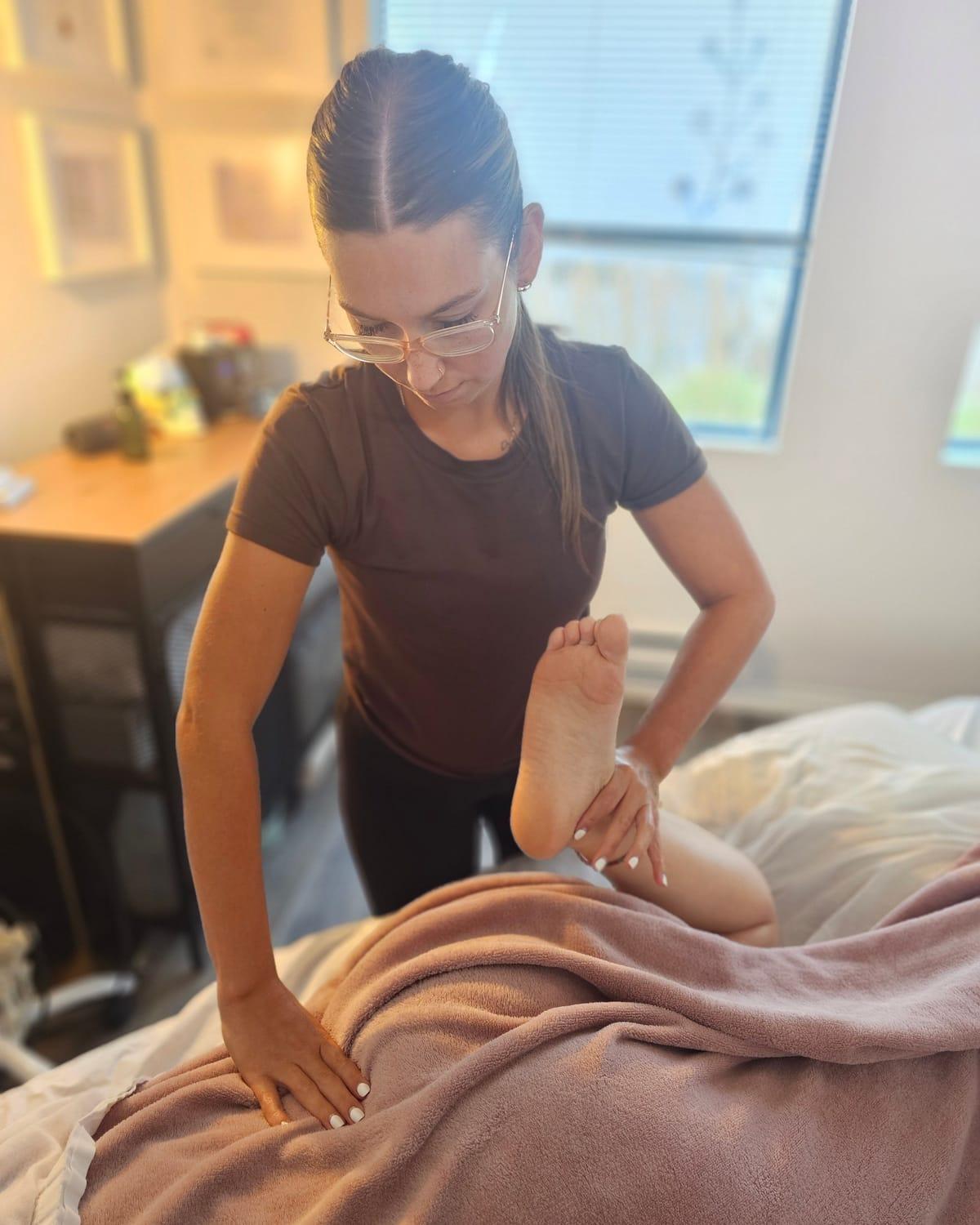
Massage therapy
Assessment-led, hands-on care for pain, tension, recovery and mobility.
At both clinics
Details and ratesPhysiotherapy
Practical treatment and movement plans aimed at getting function back.
At Kirschner only
Details and ratesKinesiology
Movement-based care built around real life, work and sport goals.
At Kirschner only
Details and ratesShockwave therapy
Focused energy pulses for tendon and connective-tissue pain that has stopped improving.
At Kirschner only
Details and ratesBefore you book
All questionsCan shockwave therapy help plantar fasciitis?
Shockwave therapy is commonly used for plantar fascia and other tendon pain that has stopped improving with a loading programme, and it may help some people. It delivers short, focused energy pulses to the painful area, with the number of follow-ups set at your first assessment. At Back in Health it is delivered at the Kirschner clinic by our kinesiologist and manual osteopathic practitioner.
Should I rest a sore tendon or keep using it?
Complete rest tends to calm tendon pain only until you return to activity, because tendons adapt to load slowly. A graded strengthening programme that the tendon can tolerate is the approach commonly used instead. Your practitioner can help you find a level of activity that keeps you moving without flaring it.
Should I try physiotherapy or shockwave first for tendon pain?
Most people start with an assessment and a progressive loading plan, and shockwave therapy is usually considered where pain has persisted despite that. Physiotherapy and kinesiology both build that loading programme. All three are offered at the Back in Health Kirschner clinic, so the plans can be coordinated.
How long does tendon pain take to settle?
Tendon pain often takes weeks to months to change, because tendons adapt more slowly than muscle. Progress is usually measured in how much load you can tolerate, such as walking further or running longer, rather than day-to-day pain alone. Your practitioner can adjust your plan with you as you go.
Can massage or IMS help with tendon pain?
Massage therapy works on the calf, forearm and shoulder muscles that keep loading a sore tendon, and some people book it alongside a strengthening plan. IMS (intramuscular stimulation) is needling for tight, irritable muscle, booked as part of a physiotherapy appointment at the Kirschner clinic. Neither replaces the loading programme that tendon care is usually built around.
Do I need a doctor referral to book?
No. In British Columbia you can book massage therapy, physiotherapy, osteopathy, kinesiology and acupuncture directly, with no referral. Some extended health plans ask for a referral before they reimburse, so check your own plan if you intend to claim.
What is the difference between massage therapy, physiotherapy and osteopathy?
Massage therapy works on soft tissue directly, and people often book it for pain and tension. Physiotherapy assesses how a joint moves and loads, then combines manual treatment with a progressive exercise plan. Manual osteopathy is gentler and whole-body, working on restriction across joints, fascia and connective tissue.
Can you help me choose a practitioner?
Yes. Call the clinic you would like to visit, or email admin@backinhealth.ca with a short description of what is going on, and the front desk will suggest a discipline and a practitioner who fits.
What should I expect at my first visit?
Arrive a few minutes early to complete a short health history. Your practitioner will ask about your symptoms and goals, assess the area, and then treat. You leave with a plan: what was found, what to do at home and whether a follow-up is worth booking.
Book treatment for tendon & heel pain
Or callGlenmore250-762-4748Kirschner250-860-0383