Movement care for neurological conditions in Kelowna
A neurological diagnosis changes what movement costs. The aim of care here is not to reverse the condition but to hold on to function, balance and confidence for as long as possible, and to make everyday tasks less effortful.
What is usually going on
Our kinesiologist has spent ten years working with people living with Parkinson's disease, stroke, multiple sclerosis, progressive supranuclear palsy and ALS. Kinesiology sessions build a programme around what you actually need to do: getting up from a chair, walking safely, turning, reaching, keeping the trunk strong. Progress is measured in those tasks, not in the gym.
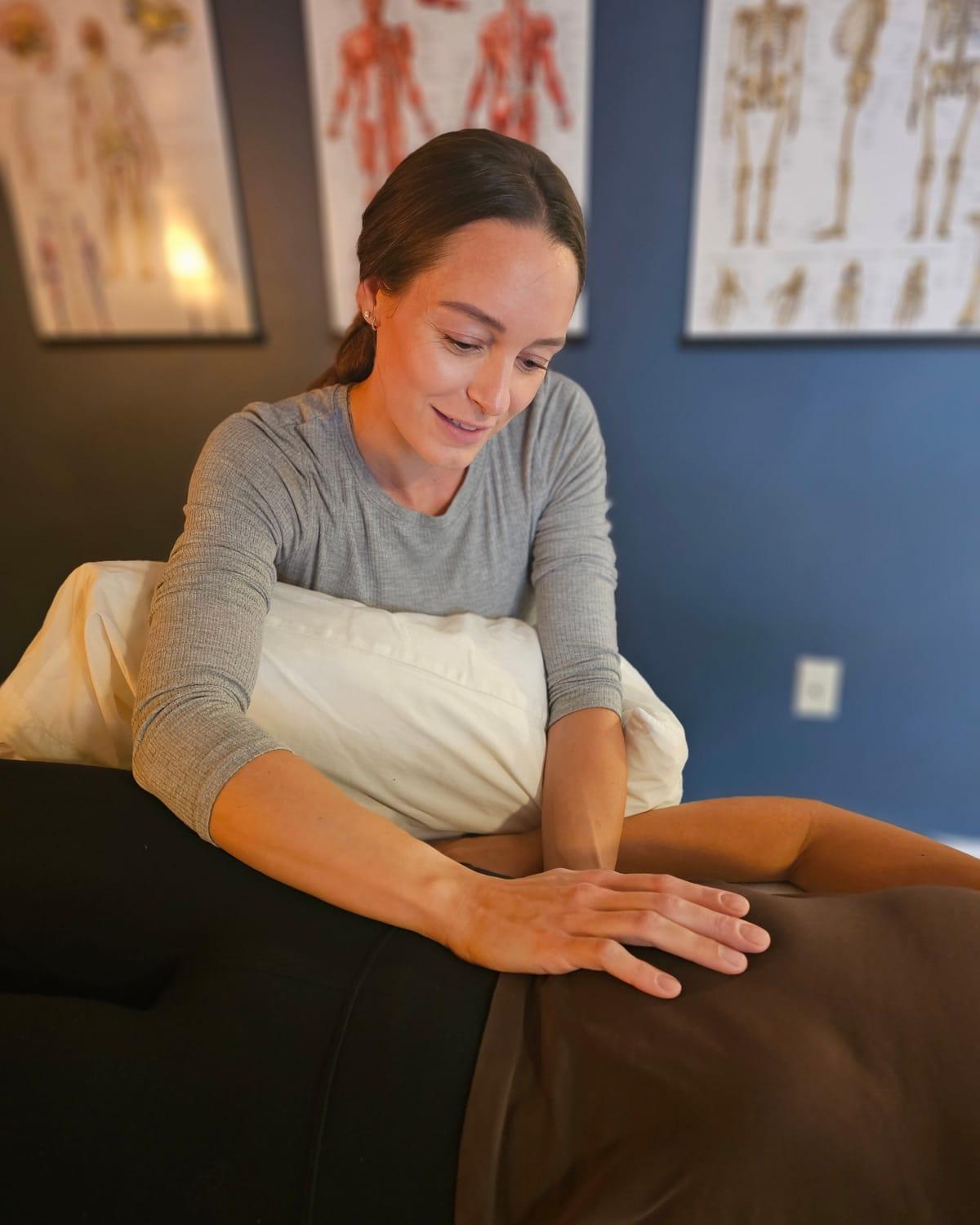
Massage therapy and manual osteopathy sit alongside it for the stiffness and pain that come with altered movement. One of our RMTs, Alyssa Watkins, lists neurological disorders among her focus areas, and treatment is adapted for tone, sensation and fatigue. Bring any guidance from your neurologist or physician and we will work within it.
When to see a doctor instead
New or rapidly changing neurological symptoms, a sudden change in speech, vision or strength, or a fall with a head injury need medical assessment first. We work alongside your neurologist, not instead of one.
How we treat it
3 of our disciplines are used for this, often together. If you are not sure which to book, call and describe what is going on.
Massage therapy
Assessment-led, hands-on care for pain, tension, recovery and mobility.
At both clinics
Details and ratesOsteopathy
Gentle manual care that looks at how the whole body is moving.
At Kirschner only
Details and ratesKinesiology
Movement-based care built around real life, work and sport goals.
At Kirschner only
Details and ratesBefore you book
All questionsCan kinesiology help with Parkinson's disease?
Kinesiology aims to help people living with Parkinson's hold on to function, balance and confidence, rather than to change the condition itself. Sessions build a programme around everyday tasks such as rising from a chair, walking safely, turning and reaching. At Back in Health, kinesiology is at the Kirschner clinic with Sean Dance, who has spent ten years working with people living with Parkinson's, stroke, MS, PSP and ALS.
Is massage safe after a stroke or with MS?
Massage therapy is generally adapted rather than avoided for people living with stroke or MS, with pressure and positioning adjusted for muscle tone, altered sensation and fatigue. Tell the clinic about your diagnosis and any guidance from your care team when you book. Alyssa Watkins, a registered massage therapist at the Glenmore clinic, lists neurological disorders among her focus areas.
Do I need my neurologist's approval before booking?
You do not need a referral to book, but bring any guidance from your neurologist or physician and treatment will work within it. New or rapidly changing symptoms, a sudden change in speech, vision or strength, or a fall with a head injury need medical assessment first. Back in Health works alongside your neurologist, not instead of one.
Which Back in Health clinic is accessible for someone with limited mobility?
The Kirschner clinic has step-free access on the ground floor of Kirschner Plaza, and it is where kinesiology, manual osteopathy, physiotherapy and the movement studio are based. The Glenmore clinic is on the second floor, up a flight of stairs, and is not wheelchair accessible. Both clinics have free parking.
Are kinesiology and manual osteopathy regulated in BC?
No. Kinesiology and manual osteopathy are not regulated by a health college in British Columbia, unlike registered massage therapy, which is regulated by the College of Complementary Health Professionals of BC. Our kinesiologist and manual osteopathic practitioner holds a Bachelor of Human Kinetics from UBC Okanagan and a Diploma in Osteopathic Manual Practice, and is a member of OsteopathyBC. Extended health coverage for these services varies, so check your own plan.
Do I need a doctor referral to book?
No. In British Columbia you can book massage therapy, physiotherapy, osteopathy, kinesiology and acupuncture directly, with no referral. Some extended health plans ask for a referral before they reimburse, so check your own plan if you intend to claim.
What is the difference between massage therapy, physiotherapy and osteopathy?
Massage therapy works on soft tissue directly, and people often book it for pain and tension. Physiotherapy assesses how a joint moves and loads, then combines manual treatment with a progressive exercise plan. Manual osteopathy is gentler and whole-body, working on restriction across joints, fascia and connective tissue.
Can you help me choose a practitioner?
Yes. Call the clinic you would like to visit, or email admin@backinhealth.ca with a short description of what is going on, and the front desk will suggest a discipline and a practitioner who fits.
What should I expect at my first visit?
Arrive a few minutes early to complete a short health history. Your practitioner will ask about your symptoms and goals, assess the area, and then treat. You leave with a plan: what was found, what to do at home and whether a follow-up is worth booking.
Book treatment for neurological conditions
Or callGlenmore250-762-4748Kirschner250-860-0383